The Ultimate Seasonal Spice Guide
Welcome to your year-round companion for aromatic cooking. This guide features 95 spices, herbs, and blends from around the world, so you can explore the flavors that shine in each season. Discover rare specialties, traditional blends, and seasonal favorites, and learn how to make the most of them.
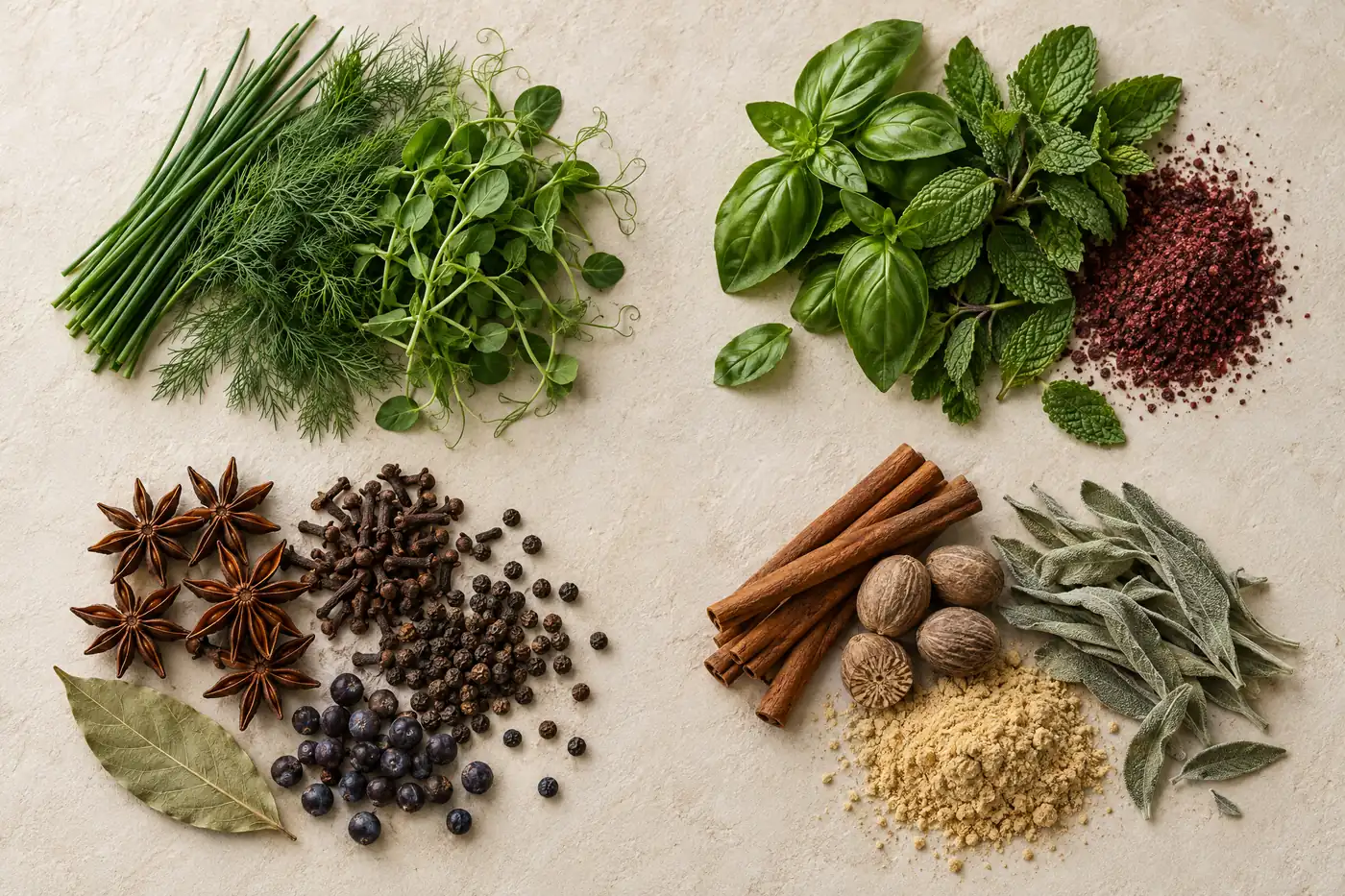
Spring: Awakening Flavors
Spring brings fresh, vibrant flavors that awaken the palate after winter's hearty dishes.
22 spices, herbs, and blends for spring.
Fresh Dill
Bright, grassy, and slightly tangy. Perfect for spring vegetables, fish dishes, and early garden salads.
Lemon Herb Blend
Zesty and aromatic combination of lemon zest, thyme, and parsley. Ideal for roasted spring vegetables and grilled meats.
Fresh Chives
Mild onion flavor with a fresh bite. Essential for spring soups, omelets, and potato dishes.
Tarragon
French herb with anise-like flavor
Distinctive anise-like flavor that's both sweet and slightly bitter. Excellent with chicken, eggs, and spring vegetables.
Fresh Parsley
Clean, fresh, and slightly peppery. The foundation of spring cooking, perfect for chimichurri, tabbouleh, and fresh sauces.
Chervil
Delicate French herb, 'gourmet's parsley'
Delicate anise flavor with subtle sweetness. A cornerstone of French fines herbes, ideal for eggs and delicate spring dishes.
Lemon Balm
Citrusy and calming with mint undertones. Wonderful in spring teas, fruit salads, and light seafood dishes.
Green Garlic
Mild, sweet garlic flavor without the bite. Perfect for spring soups, pasta, and when you want gentle garlic notes.
Sorrel
Lemony herb with tart, acidic flavor
Tart and lemony with a slight metallic note. Adds brightness to spring soups, sauces, and salads.
Watercress
Peppery and slightly bitter with a fresh bite. Excellent in spring salads, sandwiches, and as a garnish.
Spring Onions
Mild onion flavor with tender green tops. Essential for spring stir-fries, soups, and Asian-inspired dishes.
Ramps
Wild leeks, foraged spring delicacy
Pungent garlic-onion flavor that's uniquely wild. A foraged spring treasure perfect for pasta and egg dishes.
Fresh Lovage
Intense celery-like flavor with citrus notes. Traditional European herb perfect for spring soups and stocks.
Pink Peppercorns
Not true pepper, fruity and mild
Sweet, fruity, and mildly spicy. Beautiful color and delicate heat for spring dishes and fish.
Fresh Pea Shoots
Sweet and vegetal with a crisp texture. Seasonal delicacy perfect for spring stir-fries and salads.
Lemon Thyme
Classic thyme with bright citrus notes. Perfect for spring lamb, fish, and vegetable dishes.
Wild Garlic
Foraged garlic leaves, milder than bulb
Mild garlic flavor with green, leafy texture. Foraged spring herb perfect for pestos and compound butters.
Fresh Fennel Fronds
Mild anise flavor with delicate texture. Wonderful garnish for spring fish and Mediterranean dishes.
Violet Leaves
Edible flowers and leaves with mild flavor
Subtle, slightly sweet flavor with beautiful purple color. Elegant garnish for spring salads and desserts.
Fresh Dandelion Greens
Bitter and slightly peppery. Foraged spring green perfect for detox salads and sauteed dishes.
Elderflower
Fragrant white flowers for cordials and desserts
Floral and muscat-like with honey notes. Perfect for spring cordials, desserts, and delicate infusions.
Green Coriander Seeds
Fresh, citrusy, and bright. Young coriander seeds perfect for spring marinades and fresh chutneys.
Summer: Bold & Bright
Summer's abundance calls for fresh, vibrant spices that complement the season's bountiful produce.
24 spices, herbs, and blends for summer.
Fresh Basil
Sweet, peppery, and aromatic. The cornerstone of summer cooking, perfect for tomatoes, pasta, and pestos.
Oregano
Earthy and slightly bitter with hints of lemon. Essential for Mediterranean dishes and grilled vegetables.
Paprika
Sweet and smoky with vibrant color. Adds depth to grilled meats and summer vegetable dishes.
Sumac
Middle Eastern spice with tart, lemony flavor
Tart and lemony with a beautiful red color. Excellent for summer salads and grilled meats.
Fresh Rosemary
Piney and aromatic with camphor notes. Perfect for grilled lamb, roasted potatoes, and summer bread.
Marjoram
Sweet and floral, like a gentler oregano. Wonderful with summer tomatoes, grilled vegetables, and herb butter.
Culinary Lavender
Food-grade lavender flowers
Floral and slightly sweet with camphor notes. Beautiful in summer desserts, honey, and Mediterranean dishes.
Thai Basil
Spicy and licorice-like with hints of anise. Essential for Southeast Asian dishes and summer stir-fries.
Fresh Mint
Cool and refreshing with sweet undertones. Perfect for summer drinks, salads, and Middle Eastern dishes.
Fresh Cilantro
Bright and citrusy with a distinctive flavor. Essential for Mexican, Asian, and fresh summer salsas.
Lemon Verbena
Intensely lemony herb for teas and desserts
Intensely lemony and floral. Wonderful for summer teas, fruit salads, and light desserts.
Za'atar
Middle Eastern blend: thyme, sumac, sesame
Tangy and nutty Middle Eastern blend. Perfect for flatbreads, grilled vegetables, and summer mezze platters.
Smoked Paprika
Rich, smoky, and deeply flavored. Adds barbecue essence to summer grilling and roasted vegetables.
Espelette Pepper
French Basque pepper, mild heat with fruit
Fruity and mildly spicy from the French Basque region. Perfect for summer fish dishes and vegetables.
Fresh Lemongrass
Citrusy and floral with grass-like aromatics. Essential for Southeast Asian summer soups and marinades.
Aleppo Pepper
Syrian pepper flakes, fruity and moderately hot
Fruity heat with moderate spice level. Wonderful Middle Eastern seasoning for summer dishes.
Fresh Shiso
Unique flavor combining mint, basil, and anise. Japanese herb perfect for summer sashimi and salads.
Nasturtium Flowers
Peppery and slightly spicy with beautiful colors. Edible flowers perfect for summer salad garnishes.
Berbere
Ethiopian spice blend with fenugreek and chilies
Complex Ethiopian blend with warm heat and deep flavors. Exotic addition to summer grilling.
Fresh Savory
Peppery and slightly bitter with thyme-like qualities. Traditional herb for summer bean dishes.
Urfa Biber
Dark, smoky Turkish pepper with chocolate notes. Rich complexity for summer grilled meats.
Maras Pepper
Turkish red pepper flakes, sweet and fruity
Sweet and fruity Turkish pepper with mild heat. Perfect for summer Mediterranean dishes.
Fresh Purslane
Lemony and slightly salty with succulent texture. Traditional summer green in Mediterranean cuisine.
Rose Petals
Floral and romantic with subtle sweetness. Beautiful garnish for summer desserts and drinks.
Autumn: Warm & Comforting
Autumn spices bring warmth and comfort as the weather cools and hearty ingredients take center stage.
24 spices, herbs, and blends for autumn.
Cinnamon
Warm, sweet, and woody. Ideal for baked goods, warm drinks, and savory dishes like Moroccan tagines.
Nutmeg
Warm and slightly sweet with a hint of pepper. Perfect for autumn squashes, cream sauces, and desserts.
Sage
Earthy and slightly bitter with a velvety texture. Essential for autumn poultry and root vegetables.
Cardamom
Aromatic spice with citrusy, floral notes
Intensely aromatic with citrusy and floral notes. Wonderful in both sweet and savory autumn dishes.
Allspice
Complex flavor reminiscent of cinnamon, cloves, and nutmeg. Perfect for autumn baking and Caribbean dishes.
Fresh Ginger
Spicy, warming, and slightly sweet. Essential for autumn soups, baking, and Asian-inspired dishes.
Turmeric
Earthy and slightly bitter with a golden color. Wonderful for autumn curries, golden milk, and roasted vegetables.
Bay Leaves
Aromatic and slightly bitter with eucalyptus notes. Essential for slow-cooked autumn stews and braises.
Fennel Seeds
Sweet and licorice-like with a warming quality. Perfect for autumn sausages, roasts, and Italian dishes.
Ground Cloves
Intensely aromatic and slightly numbing. Essential for autumn spice blends, mulled drinks, and holiday baking.
Chinese Five-Spice
Star anise, cloves, cinnamon, fennel, Sichuan pepper
Complex blend balancing sweet, sour, bitter, pungent, and salty. Perfect for autumn roasts and Asian cuisine.
Garam Masala
Warm Indian spice blend
Warm, aromatic Indian blend of cinnamon, cardamom, and cloves. Excellent for autumn curries and spiced dishes.
Ras el Hanout
Moroccan spice blend, "head of the shop"
Complex Moroccan blend with rose petals and warming spices. Perfect for autumn tagines and roasted vegetables.
Ground Galangal
Citrusy and piney with ginger-like heat. Southeast Asian spice perfect for autumn curries and soups.
Grains of Paradise
West African pepper with citrus and cardamom notes
Peppery with citrus and cardamom notes. Exotic West African spice for autumn meat dishes.
Dried Shiitake Powder
Umami-rich and earthy with mushroom depth. Perfect for autumn broths, risottos, and vegetarian dishes.
Long Pepper
Ancient spice, sweeter and more complex than black pepper
Sweet, spicy, and more complex than black pepper. Historical spice perfect for autumn game dishes.
Dried Pomegranate Seeds
Tart and slightly sweet with crunch. Middle Eastern ingredient perfect for autumn grain dishes.
Vadouvan
French-Indian curry blend with shallots
French-Indian curry blend with caramelized onions. Sophisticated spice for autumn vegetables and proteins.
Apple Pie Spice
Classic American blend of cinnamon, nutmeg, and allspice. Essential for autumn baking and desserts.
Baharat
Middle Eastern all-spice blend
Warming Middle Eastern blend with allspice and black pepper. Perfect for autumn meat dishes and pilaf.
Dried Orange Zest
Concentrated citrus flavor with slight bitterness. Beautiful in autumn baking and Moroccan dishes.
Sumac Onions
Pickled onions with sumac, Middle Eastern condiment
Tangy and colorful with pickled notes. Traditional Middle Eastern condiment for autumn mezze plates.
Pumpkin Pie Spice
Classic autumn blend of cinnamon, ginger, nutmeg, and cloves. Essential for seasonal baking and beverages.
Winter: Rich & Warming
Winter spices provide warmth and richness, perfect for hearty stews and comforting baked goods.
25 spices, herbs, and blends for winter.
Whole Cloves
Intense, sweet, and warming. Essential for mulled wines, holiday baking, and slow-cooked meats.
Star Anise
Sweet and licorice-like with warming properties. Perfect for broths, braises, and winter drinks.
Thyme
Earthy and slightly minty. Excellent for winter roasts, stews, and hearty vegetable dishes.
Juniper Berries
Pine-scented berries used in European cuisine
Pine-scented and slightly bitter. Traditional with game meats and winter preserves.
Black Peppercorns
Sharp, hot, and aromatic. The king of spices, essential for winter stews, roasts, and seasoning blends.
White Pepper
Hot and earthy with a clean heat. Perfect for light-colored winter sauces and delicate dishes.
Mace
Outer covering of nutmeg, more delicate flavor
Delicate nutmeg flavor with citrus notes. Wonderful for winter cream sauces and refined dishes.
Fenugreek
Maple-like sweetness with slight bitterness. Essential for Indian winter curries and spice blends.
Cumin Seeds
Earthy, warm, and slightly bitter. Perfect for winter chilis, curries, and Middle Eastern dishes.
Coriander Seeds
Citrusy and slightly sweet when ground. Essential for winter spice blends and Indian cuisine.
Mustard Seeds
Sharp and pungent when crushed. Perfect for winter pickles, roasts, and German-inspired dishes.
Caraway Seeds
Anise-like flavor, popular in European cooking
Distinctive anise-like flavor with earthy notes. Traditional in winter breads, cabbage dishes, and European cuisine.
Sichuan Peppercorns
Chinese spice with numbing, citrusy sensation
Citrusy and numbing sensation rather than heat. Essential for authentic Chinese winter hot pot and stir-fries.
Asafoetida (Hing)
Pungent Indian spice, use sparingly
Intensely pungent when raw, but adds savory depth when cooked. Essential for Indian winter dal and vegetarian dishes.
Nigella Seeds
Slightly bitter with onion-like flavor. Beautiful black seeds perfect for winter breads and Middle Eastern dishes.
Kala Namak
Indian black salt with sulfuric aroma
Sulfuric aroma that mellows to savory umami. Essential for Indian winter chutneys and fruit salads.
Dried Chipotle
Smoky and moderately hot with chocolate notes. Perfect for winter chilis, stews, and Mexican-inspired dishes.
Ancho Chiles
Dried poblano peppers, sweet and mild
Sweet and fruity with mild heat. Dried poblano peppers perfect for winter mole and Mexican sauces.
Mulling Spice Blend
Traditional winter blend of cinnamon, cloves, and orange peel. Essential for warming winter beverages.
Pickling Spice
Blend for preserving, includes bay, mustard, peppercorns
Traditional blend for winter preserving with bay leaves, mustard seeds, and peppercorns.
Dukkah
Egyptian nut and spice blend
Egyptian blend of nuts, seeds, and spices. Perfect winter condiment for bread, vegetables, and proteins.
Smoked Salt
Briny with deep smokiness. Adds winter barbecue flavors to roasted vegetables and meats.
Harissa Paste
North African chili paste with spices
Fiery North African blend with roasted peppers and warming spices. Perfect for winter stews and braises.
Dried Lime (Loomi)
Intensely citrusy with fermented complexity. Persian ingredient perfect for winter rice dishes and stews.
Sumac Molasses
Concentrated pomegranate syrup
Sweet-tart pomegranate concentrate. Essential for winter Middle Eastern stews and marinades.
Key Insights to Elevate Your Cooking
- The Power of Freshness: Freshly ground spices offer superior flavor compared to pre-ground alternatives. Invest in a quality spice grinder and whole spices for the best results.
- Layering Flavors: Combining spices creates complex and delightful tastes. Start with a base spice and add complementary flavors to build depth in your dishes.
- Beyond the Savory: Spices like cinnamon, cardamom, and nutmeg can enhance sweet dishes seasonally, bringing warmth to autumn desserts and brightness to spring treats.
- Storage Matters: Keep your spices potent and flavorful by storing them in airtight containers away from heat, light, and moisture. Label with purchase dates for optimal freshness tracking.
How to Use This Guide
- Select a Season: Pick a season above to explore 20 or more seasonally appropriate spices and flavors from around the world.
- Explore Spices: Work through the collection of 95 spices, herbs, and blends, with short notes on the less familiar international ingredients.
- Apply Tips: Incorporate new spice ideas into your daily meals using the practical cooking suggestions alongside each one.
- Scale a Blend: When a blend here has its own calculator, scale it to the batch you need on the blends page.
Frequently Asked Questions
How long do ground spices last?
Ground spices are best used within 6-12 months for optimal flavor, though they remain safe to use beyond this timeframe. Store them in airtight containers away from heat, light, and moisture to maintain their potency.
Can I substitute dried herbs for fresh?
Yes, a general rule is 1 teaspoon dried herbs for 1 tablespoon fresh herbs, as dried herbs are more concentrated in flavor. Add dried herbs earlier in cooking, while fresh herbs should be added near the end.
What's the best way to store spices?
Store spices in airtight containers, away from heat, light, and moisture. A cool, dark pantry or spice drawer is ideal. Avoid storing above the stove or in direct sunlight, as heat and light degrade flavor compounds.
Are the recipes beginner-friendly?
Yes, our recipes are designed to be accessible for cooks of all skill levels, with clear instructions and commonly available ingredients. While some international spices may be new to you, each recipe focuses on highlighting the featured spices without overwhelming complexity. Start with familiar spices and gradually explore more exotic varieties as your confidence grows.
Ingredient availability varies by region and season. This guide is about flavor, not dietary or health advice.
How this was checked
Cedrick Reese publishes this guide for Ready Utilities. It's a flavor reference: the tasting notes and pairings describe how each spice is commonly used rather than reporting figures from a source, so it cites none. Where a blend listed here has its own calculator on this site, that page names the published recipe it scales. The guide is reviewed as those calculators are added.