The Science of Spice Ratios: How to Balance Flavors Like a Pro
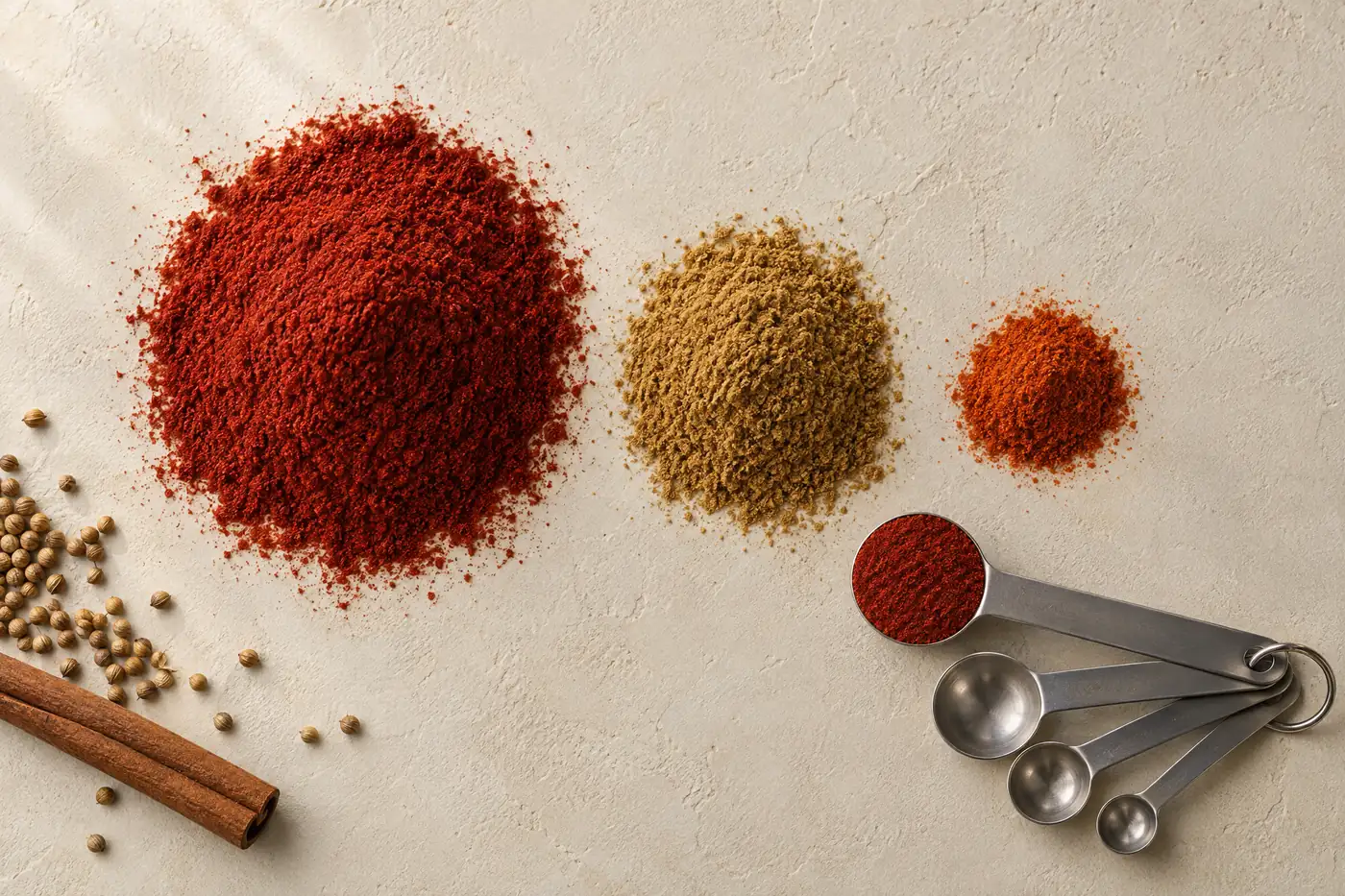
Understanding Spice Ratios
Spice ratios refer to the proportion of each spice in a blend. A well-balanced mix ensures that no single spice overpowers the others, creating a harmonious flavor profile.
Common Ratio Guidelines
- Base spices: 50-60% (e.g., cumin, coriander)
- Accent spices: 30-40% (e.g., paprika, turmeric)
- Pungent spices: 10-15% (e.g., cayenne, cloves)
Flavor Profiles and Pairings
Understanding the flavor profiles of spices helps in creating blends that complement specific dishes:
- Warm spices: cinnamon, nutmeg, allspice
- Earthy spices: cumin, coriander, turmeric
- Pungent spices: mustard seeds, black pepper
Creating Your Own Spice Blends
Start by selecting a base flavor, then add complementary spices in appropriate ratios. Always taste and adjust as needed.
Tips for Balancing Flavors
- Start with small quantities and adjust gradually.
- Consider the cooking method; some spices intensify with heat.
- Balance heat with sweetness or acidity as needed.
Conclusion
Mastering spice ratios enhances your culinary creations, allowing you to craft dishes with depth and complexity. Embrace experimentation and let your palate guide you.
How this was checked
Cedrick Reese publishes this guide for Ready Utilities. The ratio bands here are general guidance for building a blend, not measured figures from a source, so the guide cites none. The blend calculators on this site work differently: each one scales a single named published recipe and shows its real proportions. The guide is reviewed when that approach changes.