Global Spice Blends and Their Signature Ratios
Across the world, every culture has developed unique spice blends, carefully crafted to reflect local ingredients, tastes, and traditions. Understanding these blends, and the signature ratios behind them, can open the door to richer, more flavorful cooking at home.
What Are Signature Ratios?
Each blend typically follows an internal balance, often a version of the 5:3:2 rule: base spice, aromatic or support, and accent spice. This ratio ensures harmony and flavor depth without any one ingredient dominating.
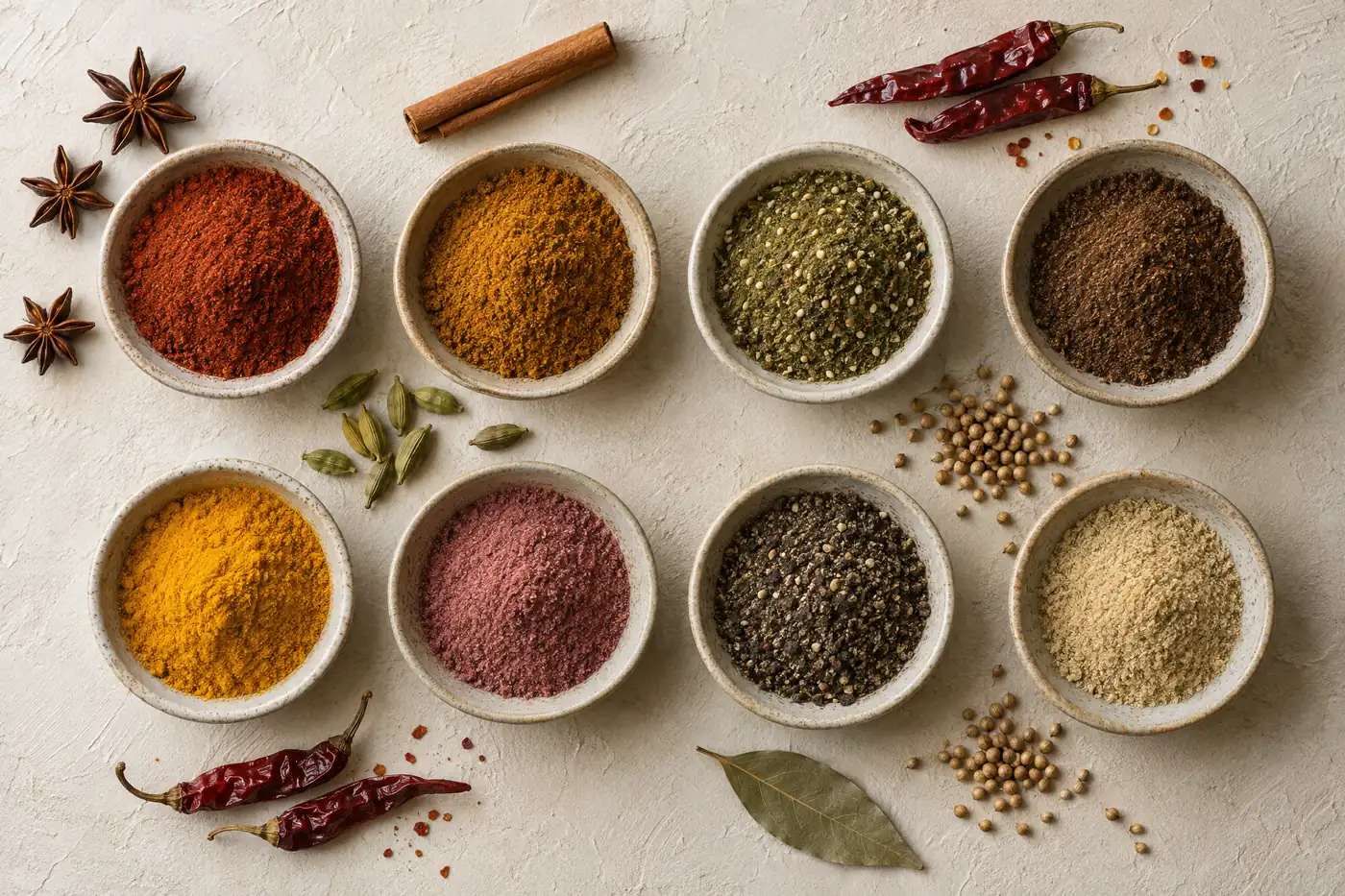
Examples of Traditional Blends
The percentages below are general illustrations of how each blend is balanced, not measured amounts from a published recipe. For exact amounts you can scale, use the sourced calculator for each blend, where every ingredient is credited to a named publisher.
Garam Masala (India)
- 40% coriander + cumin (base)
- 30% cinnamon, cloves, cardamom (aromatic)
- 30% pepper, nutmeg (accent)
Za'atar (Middle East)
- 40% thyme or oregano (base herb)
- 30% sumac (acidic accent)
- 30% toasted sesame seeds + salt (texture + balance)
Ras el Hanout (North Africa)
- 50% cumin, coriander, cinnamon
- 30% turmeric, ginger, cloves
- 20% cayenne, nutmeg, black pepper
Tips for Crafting Your Own
- Start with a base you love, like cumin or paprika.
- Add layers: one sweet, one pungent, one aromatic.
- Test in small batches, and label your jars!
How this was checked
Cedrick Reese publishes this guide for Ready Utilities. The percentages in it are general illustrations of how each blend is balanced rather than figures from a published recipe, and the guide says so beside them. The blend calculators on this site are different: each one scales a single named published recipe with every amount credited. This guide is reviewed as sourced calculators are added for the blends it mentions.